Nairobi Young Mothers’ Sewing Club

After months of communication and preparation we finally arrived in Kenya. Colleen Demers and I flew to Nairobi to get the sewing project under way.

We met with Jane Otai at the Jhpeigo office and set off from there. The drive seemed long, maybe an hour, and it gave me a good perspective on the surroundings which lead up the Kariobangi slum where we were heading.

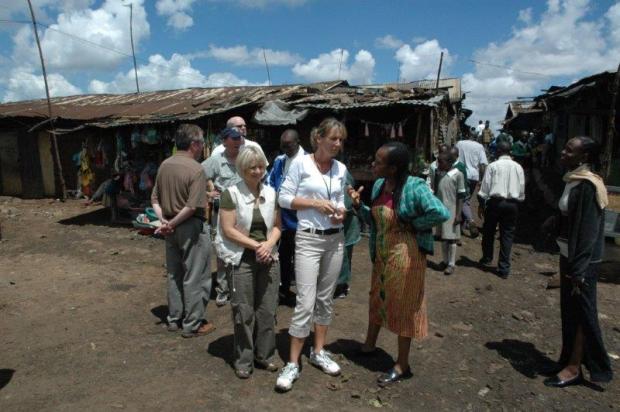
The taxi stopped outside a dilapidated six-storey building, just outside the slum. All around broken down buildings, garbage strewn everywhere, street vendors yelling for business, school kids in dishevelled uniforms waiting to go inside a room that they call school, security guards standing around, smoke billowing from piles of burning garbage, mothers hanging clothes on a line right outside their shanties. Smells of cooking food intermingled with smoke and urine. The heat and humidity seems to always magnify these odours.

We walked up five flights of narrow stairs until we reached the floor where Jane, Colleen and I were welcomed by a dozen shy, young women and a few of their children. I’m sure they were just as curious as we were. It was time to get acquainted and ease into the training program that lay ahead.

Although it was a very small space with limitations, as it was shared on different days for different purposes, we managed to work around the conditions and turn it into a sewing room of sorts.

Each sewing machine needed to be set up to work properly, the functions explained and each person given instructions on how to use the machine efficiently.  The moms were ready to try a power machine for the first time and were excited and happy!

I could see how eager they were to learn new techniques and Colleen was such a good teacher. Highly qualified, with years of sewing experience and expertise, Colleen was living her dream to work with young women to help them to establish a level of creativity and a standard of quality in their sewing. I could see that they were quick learners.

Our goal was to teach the women how to create menstrual pads and a carry special carry bag, both for themselves and to sell on to others, while helping them understand hygiene issues and overcome embarrassment in dealing with periods.  Inside each bag is room for a fresh, clean pad as well as space for the soiled one to be transported home for washing later. When the young women shared how they didn’t like the idea of washing and hanging out the pads to dry, Colleen found a mesh fabric in which to store the drying pad away from prying eyes.

Most people don’t realize the shame and frustration that comes with girls getting their period. So many of them are dropping out of school because of it. Girls are not given proper hygienic feminine products to ensure they will not get infections during their periods.

We spent time sourcing out fabrics that were not only absorbent and comfortable but also cost effective, ensuring a sustainable solution. I wanted a creative, organic look to the carry bag. A look that would reflect the African culture, so we agreed to beige burlap and the insert would be the African cement bag and a pendant that was created and handmade by the young moms. We hoped that these packages would sell well in the western market. The inserts are waterproof and adequate for the girls in the slum.

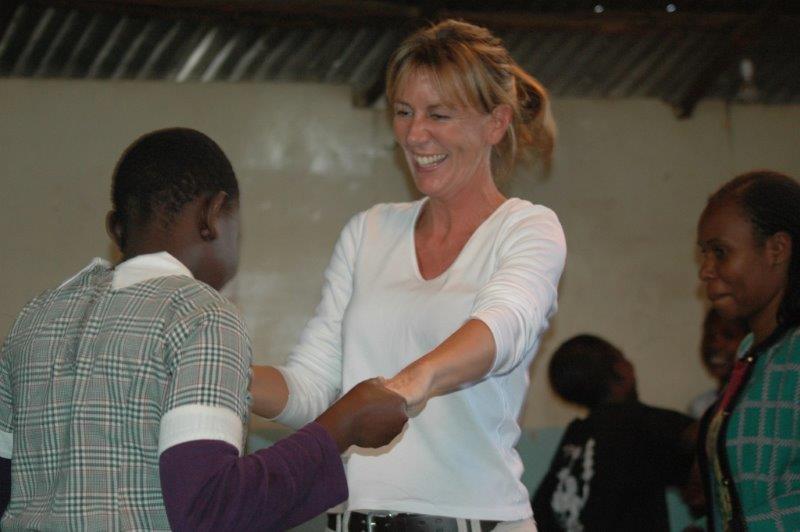
The looks of joy and accomplishment were overwhelming as the young women learned each new technique! Making their own patterns, learning how to use a snap machine, using a cutting board rather than scissors, and exploring the possibilities with their sergers was exciting!

Meanwhile, Colleen and I realized that their work space was in desperate need of organization. I purchased several containers, drawers and bags to manage the clutter and help clean up the mess, and we showcased their clothing and jewellery in a glass cabinet. Everyone was overjoyed!

Colleen bonded with the group in a way that will be memorable for years to come. She asked to carry the baby on her back so she could experience a little bit of their daily life.

Besides the training, we spent time singing and dancing, laughing and crying, sharing food, worship and prayer, but the greatest of all was our exchange of love and friendship, the meaning of respect.

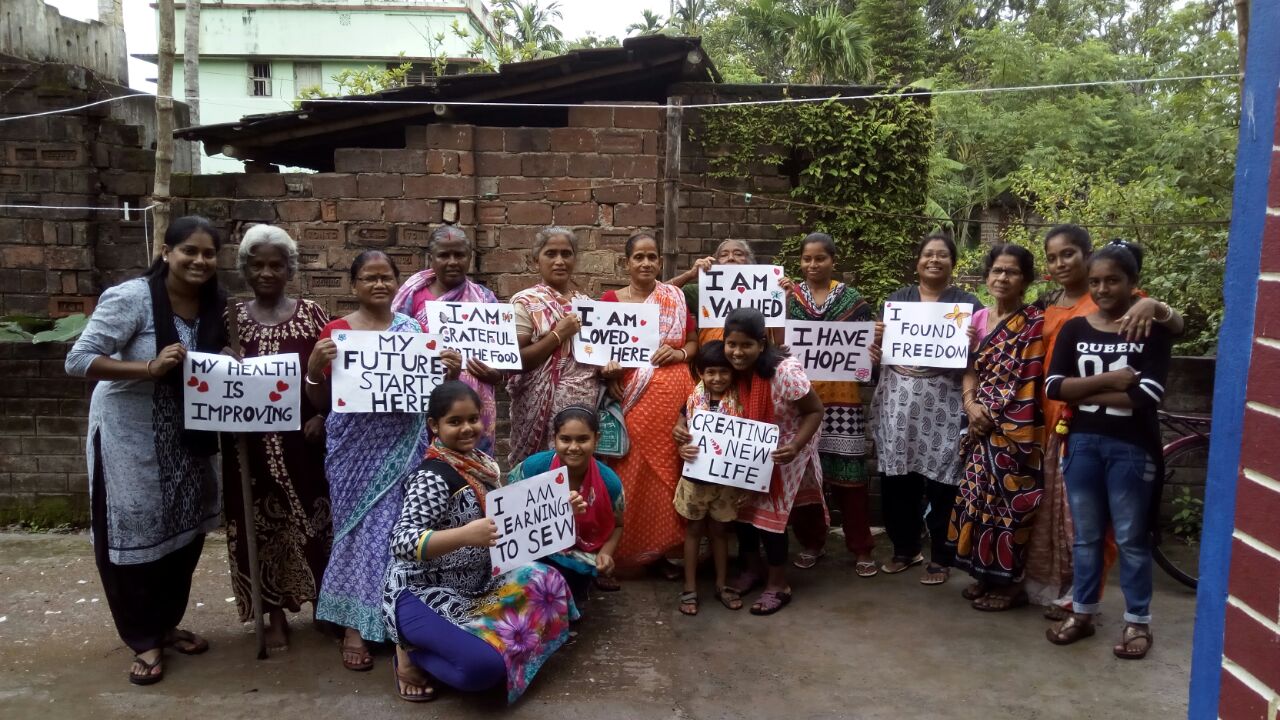
These young, single moms were imparted with encouragement and hope. Whether they had suffered hardship and discrimination, making ends meet or dealing with HIV aids, there was now potential for change. In one small way, we made an impact through education to help these individuals turn around their future, perhaps reach out and teach others and, above all, help their children to make better choices for the next generation.

I am encouraged by organizations such as Jhpiego, World Vision and Better by Half, for all the work they do to help empower women and girls to make “the world twice as good”.
African Girls Empowerment Program: Mathare Valley, Part 2

It was a time I will never forget, walking through the Mathare Valley slums and hearing the terrible stories. Scavenging every day, just to find scraps to feed their families, mothers would succumb in desperation to selling their girls.

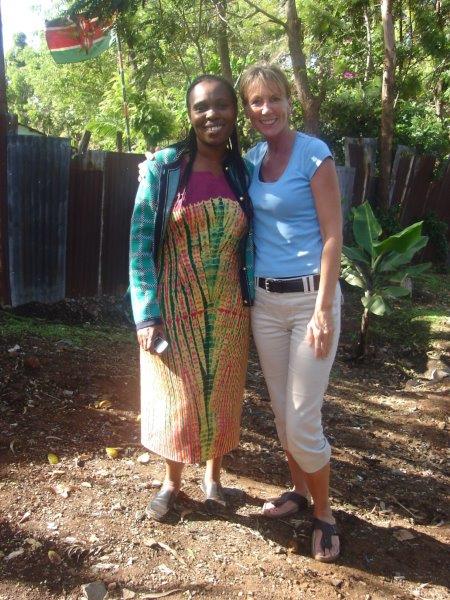
Mathare Valley, Brenda and JaneJane Otai is a national who grew up in this slum. She has a deep commitment to help these people. Understanding the perspective of slum dwellers so well, she was offered the amazing opportunity to work with Compassion International, which is how I met her.

We were discussing the difficult situations that pre-pubescent girls face. Young girls are naïve targets for sexual predators and they have to deal with many health issues from unhygienic menstruation practices, pregnancies, STD’s and AIDS.

Mathare Valley Brenda inspects fem hygiene articles
This is the material girls are using for their periods; it is dirty and causes infections.

It was clear to me that we needed to educate these girls on some basic health topics. Eventually, Jane and I developed a program to provide girls with feminine hygiene products, underwear and pain medication, as well as information about nutrition, health, sex and cultural issues. The “African Girls Empowerment Program” included an educational video that could be mass produced to share this knowledge throughout African communities, with a priority to girls living in the slums.

Our pilot project in July 2006 was a huge success. The morale of the girls participating in the program grew and as they gained confidence, they began to attend school again. Here are some of the highlights from the program:

  • 95% attendance by both the participants and the facilitators.
  • The girls gained knowledge related to themselves, their sexuality, and understood the need to appreciate themselves. Majority of the girls gained self-confidence.
  • Literature regarding pertinent issues affecting their lives was made available to the girls.
  • Behavior change documentary was shown to the girls where the theme included drug abuse, peer influence and HIV/AIDS. Some of the responses the girls had after watching the ‘The Dose” included:
    • pledging to avoid bad peer groups that are capable of influencing them into drugs,
    • agreeing that drug use and abuse is a bad habit and therefore should be avoided.
  • Facilitation of the trainings was made enjoyable through the acquisition of more reference materials for both the girls and facilitators.
  • Providing sanitary pads to the girls also boosted the girls’ self-confidence significantly.
  • It was felt that the girls participating learned to understand that they are of great value and can make decisions for their lives.

From this program we learned how other communities could benefit from crucial health education to improve the lives of people living in extreme poverty.

Mathare Valley slum school, Brenda being shown how to dance

Education is empowering: Mathare Valley, Part 1

Growing up in a middle class, multi-cultural environment, it was completely normal for me to be surrounded by a variety of languages, a buoyant mix of views and different perspectives. There were lively debates, there was no talk of prejudice; I loved all my friends the same. My beliefs were celebrated, my sex was not a barrier. I did not yet understand that this was not the way of the world.

When I began to travel, I noticed that what I had embraced in my family and local community was far from the norm. It wasn’t a subtle undertone of disregard, but an out-and-out hatred of differences, that struck me as alien. Why did people show so much vehemence toward different religions, different cultures, different statuses and, most of all, different genders?

Over the years I have learned that one of the most powerful emotions behind unjust reactions is fear of the unknown. It is why I believe so strongly that education is the way forward. By providing access to knowledge and training, educators empower people to make good choices and to take charge of their lives.

Mathare Valley slums

I first travelled to Kenya in 2004, when I had the privilege of visiting many different projects with a group from Compassion International. At the time, theMathare jump rope precious momentsir main focus was developing schools and programs in Nairobi’s Mathare Valley, to support families “in becoming independent and sustainable”.

My memories are a compilation of moments ranging from incredible joy to intense pain. We witnessed mothers desperate to provide daily sustenance for their children, and at best a little something to ease the hunger: entrails, scraps, scavenged items. Life is a filthy existence in a struggle to just survive, day by day. In the midst of it all, an uplifting moment of playing jump rope and singing at the top of our voices.

WaMathare in the classroomlking through the slums is one of those times in my life that I will never forget.

I was pleasantly surprised to learn how well-run the schools supported by Compassion International appeared to be. Despite living in desperate slum conditions, the children were all perfectly outfitted in their uniforms and I remember their beautiful smiles and the incredible talent when they danced and sang for us. It amazed me at how much hope they shared in the midst of their seemingly hopeless life in the slums. Education was their ticket to a better life and groups like Compassion International have infused hope into these precious lives.

Mathare Valley slum, Jane Otai with Brenda and group from Compassion International

On our tour around the slum, I soon realized that there were some significant issues regarding the girls in particular. Many were not attending the school and some were dropping out for a variety of reasons. One of my African colleagues, Jane Otai, helped answer some of my questions. Having grown up in Mathare herself, Jane was committed to empowering girls in the slum by educating them about sex and health issues.

Menstruation is a taboo

Mathare Valley_mattress fibres used instead of feminine hygiene productsMenstruating girls were desperate, using whichever materials they could find, including contaminated pieces of mattress fabric and wool, instead of feminine hygiene products. Many became infected and sick with fever; there were ashamed of menstruation and feared staining their dresses. Already lacking in confidence, their insecurities were amplified on a monthly basis. Hunger, hormones, and their female bodies developing throughout puberty were only compounded by the pressure of lurking sex predators…and AIDS. According to Jane:

“There is an herbalist in the Mathare slum who is known to heal women from HIV and also to enable the barren ones to conceive. He takes the herb, crushes it, mixes it with some liquid concoction and drinks it himself. After he has swallowed it, he passes it sexually to the women. I wonder why they don’t ask him to give them the herb so that they can mix it for their husbands. It has never occurred to the women that this is a scam. I wonder how many have had sex with him in an effort to get cured or to conceive?! None of the barren girls has ever conceived nor has anyone been cured from HIV. In fact, I‘m sure he has spread the virus to the ones in need of children. He explains the failure of treatment to the women not having followed the procedures to the letter.”

Desperation and lack of knowledge leads to this kind of situation all over the world. Education is a way to help people help themselves. Educate to empower!

After that initial visit, Jane and I stayed in touch and we later developed a program together to provide exactly the empowerment to help girls’ confidence soar!